Headless Shopify Development Services: Complete Guide 2026 - Storefront API & Frontend Solutions
Complete guide to headless Shopify development services: Storefront API integration, custom frontends, React/Next.js development, headless architecture, pricing, and when to choose headless commerce.
What Are Headless Shopify Development Services? (Quick Answer)
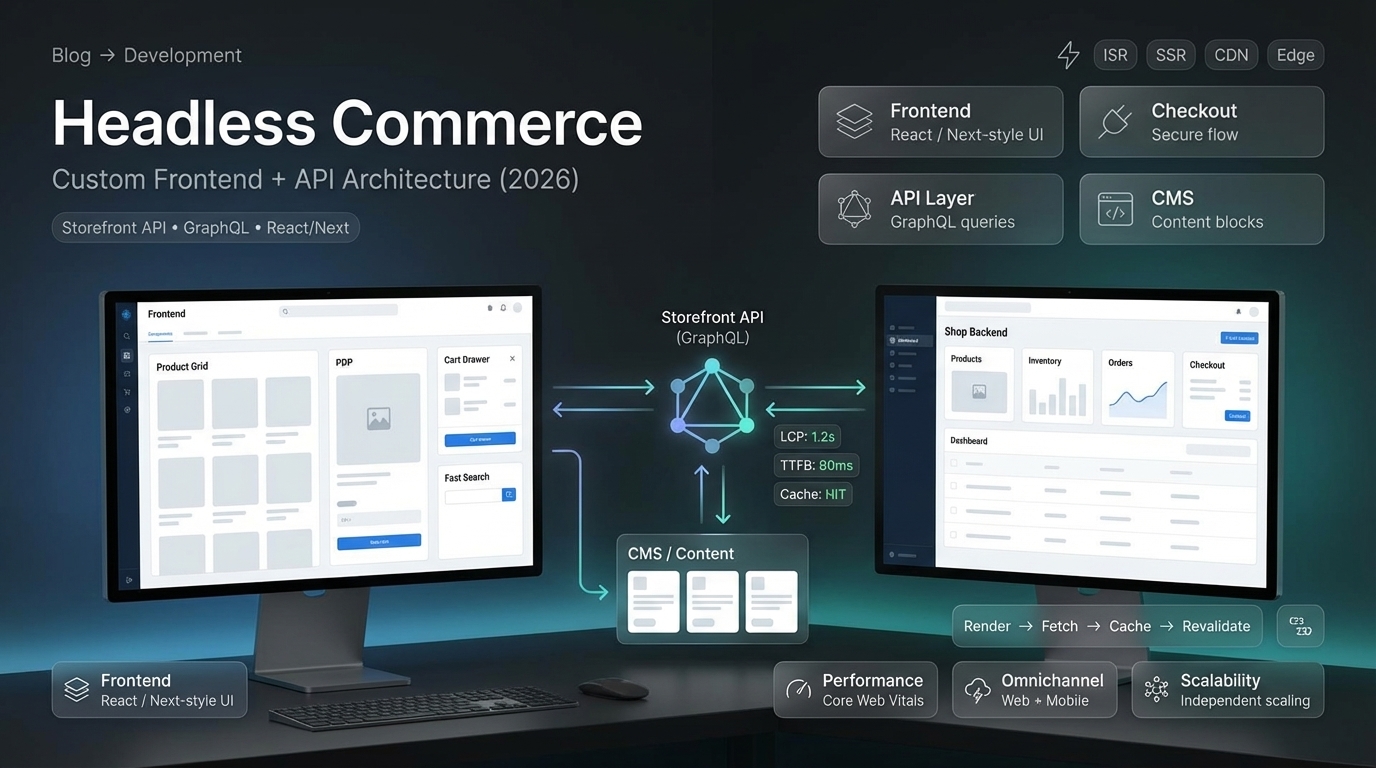
Headless Shopify development services build custom frontend applications (React, Next.js, Vue, etc.) that connect to Shopify’s backend via the Storefront API. Unlike traditional Shopify stores that use Shopify themes, headless separates the frontend (what customers see) from the backend (product management, inventory, checkout).
This architecture gives you complete design freedom and better performance, while Shopify handles backend services like products, checkout, and payments.
Looking for professional Shopify development services? We specialize in headless Shopify commerce. Check out our Shopify development services for custom frontend development.
Fuentes y Recursos Externos
- Shopify Developer Documentation - Documentación oficial de Shopify para desarrolladores
- Shopify Partners - Programa oficial de partners de Shopify
Understanding Headless Commerce
What is Headless Architecture?
In headless commerce, the frontend (customer-facing store) and backend (product management, orders, payments) are completely separated.
Traditional Shopify:
- Frontend and backend are coupled
- Uses Shopify’s Liquid theme templates
- Limited customization options
- All-in-one platform
Headless Shopify:
- Frontend is separate (custom React/Next.js app)
- Backend is Shopify (Storefront API)
- Complete design and functionality freedom
- Frontend and backend communicate via APIs
| Aspect | Traditional Shopify | Headless Shopify |
|---|---|---|
| Frontend | Shopify themes (Liquid) | Custom (React/Next.js/etc.) |
| Backend | Shopify platform | Shopify (Storefront API) |
| Design Freedom | Limited to theme constraints | Complete freedom |
| Performance | Standard Shopify performance | Optimized frontend |
| Setup Time | 2-8 weeks | 12-32 weeks |
| Cost | $5K-$50K | $40K-$200K+ |
| Maintenance | Easier (theme updates) | More complex (custom code) |
| Best For | Standard stores | Unique experiences, multi-channel |
How Headless Shopify Works
Architecture Flow:
- Frontend Application (React/Next.js/Vue) runs on separate hosting (Vercel, Netlify, AWS)
- Shopify Storefront API provides products, cart, checkout, payments
- GraphQL queries connect frontend to Shopify backend
- Checkout can be Shopify Checkout or custom checkout
- Content can come from Shopify or headless CMS (Contentful, Strapi)
Benefits:
- Complete design control
- Better performance (optimized frontend)
- Multi-channel commerce (web, mobile app, IoT, POS)
- Technology flexibility
- Custom user experiences
Types of Headless Shopify Development Services
1. Basic Headless Store
What it includes:
- Custom React/Next.js frontend
- Storefront API integration
- Product catalog display
- Shopping cart
- Basic checkout integration
- Responsive design
Cost: $40,000-$75,000 Timeline: 12-20 weeks Best for: Unique design needs, performance optimization
2. Custom Headless Frontend
What it includes:
- Advanced custom frontend
- Complex Storefront API integration
- Custom checkout experience
- Advanced product filtering
- Personalized experiences
- Performance optimization
Cost: $60,000-$120,000 Timeline: 16-24 weeks Best for: Advanced features, custom experiences
3. Enterprise Headless Platform
What it includes:
- Enterprise-grade architecture
- Multi-channel commerce
- Advanced integrations
- Custom checkout solutions
- Performance at scale
- Global deployment
Cost: $100,000-$200,000+ Timeline: 24-32 weeks Best for: Large businesses, complex requirements
4. Multi-Channel Headless
What it includes:
- Multiple frontends (web, mobile app, IoT)
- Unified Shopify backend
- Consistent experience across channels
- Channel-specific optimizations
- Advanced personalization
Cost: $120,000-$300,000+ Timeline: 28-40+ weeks Best for: Omnichannel commerce, multiple touchpoints
Summary: Headless Shopify Development Services & Pricing
| Service Type | Cost Range | Timeline | Key Features |
|---|---|---|---|
| Basic Headless Store | $40K-$75K | 12-20 weeks | Custom frontend, API integration |
| Custom Headless Frontend | $60K-$120K | 16-24 weeks | Advanced features, custom checkout |
| Enterprise Headless | $100K-$200K+ | 24-32 weeks | Scale, multi-channel ready |
| Multi-Channel Headless | $120K-$300K+ | 28-40+ weeks | Web + mobile + IoT |
| Headless Migration | $50K-$150K | 16-28 weeks | Migrate existing store to headless |
Pro tip: Headless development costs 3-5x more than traditional Shopify but provides complete design freedom and better performance. Only choose headless when you need capabilities that traditional Shopify themes can't provide.
When to Choose Headless Development
Choose Headless When:
Headless is Right When:
- You need unique frontend design beyond Shopify themes
- You want significantly better performance (faster load times)
- You need multi-channel commerce (web, mobile app, IoT devices)
- You require advanced personalization and custom user experiences
- You want technology flexibility (use your preferred frontend framework)
- You have complex content requirements (headless CMS integration)
- You need advanced analytics and tracking integration
- You want to optimize for specific markets or use cases
Avoid Headless When:
Traditional Shopify is Better When:
- You have simple requirements that themes can handle
- Budget is limited (headless costs 3-5x more)
- You need quick launch (traditional is 3-4x faster)
- You don't have technical team for maintenance
- Standard e-commerce functionality is sufficient
- You don't need multi-channel capabilities
- Performance gains don't justify additional cost
Headless Development Technologies
Frontend Technologies
Popular Frontend Frameworks for Headless Shopify
- Next.js (React) - Most popular, excellent performance
- React - Flexible, large ecosystem
- Vue.js / Nuxt.js - Easy to learn, fast development
- Gatsby - Static site generation, great SEO
- Remix - Modern React framework
- Astro - Performance-focused, content-heavy sites
APIs & Integration
Shopify APIs for Headless
- Storefront API - Product catalog, cart, checkout (GraphQL)
- Admin API - Product management, orders, inventory
- Shopify Functions - Custom checkout logic
- GraphQL - Query language for all Shopify APIs
Hosting & Infrastructure
Hosting Options
- Vercel - Optimized for Next.js, easy deployment
- Netlify - JAMstack hosting, great for static sites
- AWS - Enterprise-grade, scalable infrastructure
- Cloudflare Pages - Fast, global CDN
- Custom servers - Full control, more complex
Headless Development Process
Phase 1: Planning & Architecture
-
Requirements Analysis
Understand your needs, target audience, and business goals. Define what headless architecture will achieve that traditional Shopify can't.
-
Technology Selection
Choose frontend framework (Next.js, React, Vue), hosting platform (Vercel, Netlify), and architecture approach. Consider team expertise and long-term maintenance.
-
API Architecture Design
Design how frontend will communicate with Shopify Storefront API. Plan GraphQL queries, data fetching strategies, and caching approaches.
Phase 2: Frontend Development
-
Frontend Application Setup
Set up frontend project, configure build tools, set up hosting, and establish development workflow. Initialize chosen framework and tools.
-
Storefront API Integration
Integrate Shopify Storefront API. Build GraphQL queries for products, collections, cart, and checkout. Implement data fetching and state management.
-
Custom Frontend Development
Build custom UI components, pages, and features. Implement design system, product listings, cart, and checkout flows. Ensure responsive design.
-
Checkout Integration
Integrate Shopify Checkout or build custom checkout. Handle payment processing, order creation, and order confirmation flows.
-
Performance Optimization
Optimize frontend performance: code splitting, image optimization, caching strategies, lazy loading, and Core Web Vitals optimization.
Phase 3: Testing & Deployment
-
Comprehensive Testing
Test all functionality: product browsing, cart, checkout, payments, API integration, responsive design, and performance across devices.
-
Performance Testing
Test load times, API response times, caching effectiveness, and overall performance. Ensure headless benefits are realized.
-
Deployment
Deploy frontend to hosting platform, configure domains, set up CDN, configure environment variables, and ensure production readiness.
-
Monitoring & Maintenance Setup
Set up monitoring, error tracking, analytics, and maintenance processes. Headless requires ongoing technical support.
Benefits of Headless Shopify
Key Advantages
Headless Benefits
- Complete design freedom - no theme limitations
- Better performance - optimized frontend architecture
- Multi-channel commerce - same backend, multiple frontends
- Technology flexibility - use any frontend framework
- Custom user experiences - complete control over UX
- Scalability - frontend and backend scale independently
- Future-proof - easy to update frontend without touching backend
- SEO optimization - full control over meta tags, structure
Performance Benefits
Headless typically provides:
- Faster load times (optimized frontend, better caching)
- Better Core Web Vitals (LCP, FID, CLS improvements)
- Improved mobile performance (mobile-optimized frontend)
- Better conversion rates (faster = more sales)
Challenges & Considerations
Headless Development Challenges
Considerations
- Higher cost (3-5x traditional Shopify development)
- Longer timeline (3-4x traditional development)
- Technical complexity - requires skilled developers
- Ongoing maintenance - custom frontend needs updates
- Hosting costs - frontend hosting is separate ($50-$500+/month)
- Development team needed for maintenance
- More complex troubleshooting (frontend + backend)
- Initial learning curve for team
Pricing Breakdown
Headless Development Costs
| Solution Type | Traditional Shopify | Headless Shopify | Cost Difference |
|---|---|---|---|
| Basic Store | $10K-$30K | $40K-$75K | 3-4x more |
| Custom Design | $20K-$50K | $60K-$120K | 3-4x more |
| Advanced Features | $40K-$80K | $100K-$200K+ | 2.5-3x more |
| Enterprise | $60K-$150K | $120K-$300K+ | 2-3x more |
Additional Ongoing Costs
| Cost Type | Traditional Shopify | Headless Shopify | Notes |
|---|---|---|---|
| Shopify Plan | $29-$299/month | $29-$299/month | Same |
| Theme Updates | Included | N/A | No theme in headless |
| Frontend Hosting | Included | $50-$500+/month | Vercel/Netlify/AWS |
| Development Maintenance | $1K-$5K/month | $3K-$15K+/month | Custom code needs updates |
| API Optimization | Handled by Shopify | Custom work | Performance tuning |
Factors Affecting Cost
Cost Factors
- Complexity of frontend design and features
- Chosen frontend framework and tech stack
- Multi-channel requirements (web + mobile + IoT)
- Integration complexity with Shopify APIs
- Custom checkout vs Shopify Checkout
- Performance optimization requirements
- Timeline and urgency
- Provider expertise and experience
How to Choose a Headless Development Provider
Essential Requirements
Provider Selection Criteria
- Proven experience with headless Shopify development
- Portfolio of headless commerce projects
- Expertise in chosen frontend framework (React/Next.js/etc.)
- Strong GraphQL and Storefront API experience
- Performance optimization capabilities
- Understanding of headless architecture and best practices
- Experience with headless hosting platforms
- Ability to provide ongoing maintenance and support
- Strong project management and communication
- Transparent about challenges and costs
Questions to Ask
Critical Questions
- What headless Shopify projects have you completed?
- What frontend frameworks do you specialize in?
- How do you approach Storefront API integration?
- What's your experience with performance optimization?
- How do you handle checkout (Shopify vs custom)?
- What hosting platforms do you recommend and why?
- What ongoing maintenance and support do you provide?
- How do you handle API rate limits and optimization?
- What's your process for testing headless implementations?
- Can you show performance metrics from previous projects?
-
Validate Need for Headless
Ensure headless is truly necessary. Traditional Shopify might meet your needs at lower cost and faster timeline.
-
Define Technical Requirements
Specify frontend framework preferences, hosting requirements, performance targets, and multi-channel needs.
-
Find Specialized Providers
Look for providers with proven headless Shopify experience. Check portfolios for actual headless implementations.
-
Evaluate Technical Approach
Assess their architecture approach, Storefront API integration strategy, performance optimization, and hosting recommendations.
-
Review Performance Capabilities
Headless should provide performance benefits. Verify provider can deliver measurable performance improvements.
-
Plan for Ongoing Maintenance
Headless requires technical maintenance. Discuss long-term support, hosting management, and update processes.
Real-World Use Cases
Example 1: Performance-Critical E-commerce
Scenario: Fashion brand needs faster load times for better conversion
Headless Solution:
- Next.js frontend optimized for performance
- Advanced caching strategies
- Optimized images and assets
- Fast API queries
Results: 40% faster load times, 15% conversion increase Cost: $75,000-$120,000 Timeline: 20-28 weeks
Example 2: Multi-Channel Commerce
Scenario: Retailer needs web store + mobile app + in-store kiosks
Headless Solution:
- Single Shopify backend
- React Native mobile app frontend
- Next.js web frontend
- Custom kiosk frontend
- Unified inventory and orders
Results: Unified commerce across all channels Cost: $150,000-$250,000 Timeline: 32-40 weeks
Example 3: Custom Brand Experience
Scenario: Luxury brand needs unique, immersive shopping experience
Headless Solution:
- Custom-designed React frontend
- Advanced product visualization
- Personalized experiences
- Unique checkout flow
Results: Brand differentiation, improved customer experience Cost: $100,000-$180,000 Timeline: 24-32 weeks
| Use Case | Solution | Cost Range | Timeline |
|---|---|---|---|
| Performance Optimization | Optimized Next.js frontend | $75K-$120K | 20-28 weeks |
| Multi-Channel Commerce | Web + mobile + IoT | $150K-$250K | 32-40 weeks |
| Custom Brand Experience | Unique design & features | $100K-$180K | 24-32 weeks |
| Content-Rich Commerce | Headless CMS + Shopify | $80K-$150K | 20-32 weeks |
| B2B Commerce Portal | Custom B2B frontend | $120K-$200K | 28-36 weeks |
Red Flags to Avoid
Warning Signs
- Provider suggests headless without understanding your needs
- Can't show examples of headless Shopify projects
- Unclear about Storefront API integration approach
- No experience with performance optimization
- Unrealistic cost estimates (too low suggests lack of understanding)
- Unclear about ongoing maintenance and hosting
- No plan for API rate limit management
- Can't explain why headless is better for your specific case
Migration to Headless
Migrating Existing Store to Headless
Migration Process:
- Audit existing store (products, content, functionality)
- Design new headless architecture
- Build new frontend
- Migrate data and content
- Test thoroughly
- Launch new headless store
Cost: $50,000-$150,000 Timeline: 16-28 weeks Challenges: Maintaining SEO rankings, ensuring feature parity, data migration
FAQ
Frequently asked questions
What are headless Shopify development services?
Headless Shopify development services build custom frontend applications (React, Next.js, Vue, etc.) that connect to Shopify's backend via the Storefront API. Unlike traditional Shopify stores that use Shopify's themes, headless separates the frontend (customer-facing) from the backend (product management, checkout). Services include: Custom frontend development, Storefront API integration, Headless architecture setup, Checkout customization, Multi-channel commerce, and Performance optimization. Pricing ranges from $40,000 for basic headless stores to $200,000+ for enterprise headless commerce platforms.
What is headless Shopify commerce?
Headless Shopify commerce separates the frontend (what customers see) from the backend (product management, inventory, orders). Shopify handles backend services (products, checkout, payments) while a custom frontend (built with React, Next.js, Vue, etc.) handles the customer experience. Benefits: Complete design freedom, Better performance, Multi-channel capabilities, Custom user experiences, and Technology flexibility. Use headless when you need unique frontend experiences, multi-channel selling, or better performance than Shopify themes can provide.
What's the difference between traditional and headless Shopify development?
Traditional Shopify: Uses Shopify themes (Liquid templates), All-in-one platform, Limited frontend customization, Faster setup (2-8 weeks), Lower cost ($5K-$50K), Easier maintenance. Headless Shopify: Custom frontend (React/Next.js/etc.), Separated frontend/backend, Complete design freedom, Longer setup (12-32 weeks), Higher cost ($40K-$200K+), Requires technical expertise. Choose traditional for standard stores. Choose headless for unique designs, multi-channel, or performance needs.
How much do headless Shopify development services cost?
Headless Shopify development services cost: Basic headless store: $40,000-$75,000, Custom headless frontend: $60,000-$120,000, Enterprise headless platform: $100,000-$200,000+, Multi-channel headless: $120,000-$300,000+. Costs are higher than traditional Shopify because you're building a custom frontend from scratch. Additional costs: Frontend hosting ($50-$500+/month), Development team maintenance, Ongoing API optimization. Hourly rates: $100-$300/hr for headless development.
When should I choose headless Shopify development?
Choose headless Shopify when: You need unique frontend design that Shopify themes can't provide, You want better performance (faster load times), You need multi-channel commerce (web, mobile app, IoT), You require custom user experiences, You want technology flexibility (use any frontend framework), You have complex content requirements, or You need advanced personalization. Don't choose headless if you have simple requirements, limited budget, or need quick launch (traditional is faster and cheaper).
What technologies are used in headless Shopify development?
Headless Shopify development uses: Frontend frameworks: React, Next.js, Vue.js, Nuxt.js, Gatsby, Remix, Frontend technologies: TypeScript, GraphQL (Storefront API), State management (Redux, Zustand), Styling (Tailwind, CSS-in-JS), Backend: Shopify Storefront API, Shopify Admin API, Shopify Functions, Hosting: Vercel, Netlify, AWS, Cloudflare, Tools: Shopify CLI, GraphQL tools, Deployment pipelines. The frontend communicates with Shopify via APIs while running on separate infrastructure.
Conclusion
Headless Shopify development services create custom frontend applications that connect to Shopify’s backend via the Storefront API, providing complete design freedom, better performance, and multi-channel capabilities. While headless development costs 3-5x more than traditional Shopify ($40K-$200K+), it offers capabilities that standard Shopify themes can’t provide.
Key takeaways:
- Headless separates frontend (custom app) from backend (Shopify)
- Costs 3-5x more than traditional but provides unique benefits
- Timelines are longer (12-32+ weeks) due to complexity
- Better performance and complete design freedom
- Multi-channel commerce capabilities (web, mobile, IoT)
- Requires technical expertise for development and maintenance
- Worth the investment when you need capabilities beyond themes
Our recommendation: Only choose headless Shopify when you have specific needs that traditional Shopify themes can’t meet (unique design, multi-channel, performance optimization). Headless is powerful but expensive. Validate that headless benefits justify the additional cost and complexity. When headless is right, choose providers with proven Storefront API experience and strong frontend development capabilities.
Ready to explore headless Shopify for your business? Get in touch with experienced headless development providers to discuss your requirements.